

Full Mouth Reconstruction
When the problem is not one tooth, it is all of them
Full mouth reconstruction is what happens when repairing teeth one at a time has stopped working. It rebuilds function, bite and appearance as one coordinated plan rather than a decade of separate emergencies. When clinically appropriate, implant surgery, provisional restorations, final teeth and maintenance are coordinated under one roof by Dr. Parmar and the Hamilton team.
Who this is for
Most people arrive here after years of individual repairs. A crown here, a root canal there, a bridge that failed and was replaced, teeth that have gradually worn down or shifted. Each treatment was reasonable on its own. The problem is that none of them were part of a plan.
Eventually the mouth reaches a point where fixing the next thing in isolation makes the overall situation worse, because the bite has changed, the remaining teeth are carrying loads they were never designed for, and each new restoration has to compensate for the last one.
The distinction that matters
Full mouth reconstruction is not cosmetic dentistry done at scale. It is a functional rebuild in which appearance is one of the outputs. If someone is selling you a full mouth reconstruction primarily on how it will look, that is worth questioning.
What actually drives the decision
Reconstruction becomes the right answer when several of these are true at once:
- Multiple teeth are failing or have already been lost, and the remaining ones are compensating.
- The bite has collapsed, meaning the teeth have worn or shifted enough that the jaw closes further than it should.
- Existing crowns, bridges or implants are reaching the end of their life at roughly the same time.
- Chewing has become limited, painful or restricted to one side.
- There is jaw joint discomfort, muscle soreness or frequent headaches associated with the bite.
- The appearance of the teeth has changed noticeably, usually shorter and darker, as wear has progressed.
One of these on its own rarely justifies reconstruction. Several together usually mean that continuing to treat individual teeth is the more expensive path, because each repair is being built onto an unstable foundation.
How a reconstruction is sequenced
The order matters more than any individual procedure. A reconstruction done in the wrong sequence produces beautiful teeth on an unstable bite, which fails.
1. Diagnosis and records
Photographs, 3D imaging, digital scans, and a full assessment of how the jaw actually moves. This stage establishes where the bite should sit, which is the reference every later decision is measured against.
2. Stabilization
Anything actively deteriorating is addressed first. Active decay, gum disease, failing restorations, teeth that cannot be saved. Nothing definitive is built until the foundation is sound.
3. Testing the new bite
Where the bite is being changed, the new position is trialled in provisional restorations before anything permanent is made. You live in the proposed bite for a period, and it is adjusted based on how it actually performs rather than how it looked on a model.
4. Definitive restoration
The final restorations are made to reproduce the provisional design that has already been tested. This is why the provisional stage is not a delay. It is the stage that makes the final result predictable.
5. Protection and review
A night guard where grinding contributed to the original problem, and a review schedule. A reconstruction that is not protected from the force that caused the original damage will fail in the same way.
Why the provisional stage gets skipped
It adds time and cost, and patients understandably want to reach the end. It is also the single stage most predictive of whether the reconstruction lasts. If a plan does not include a tested provisional phase for a case involving a bite change, ask why.
A Case in Point
Worn, failing dentition rebuilt
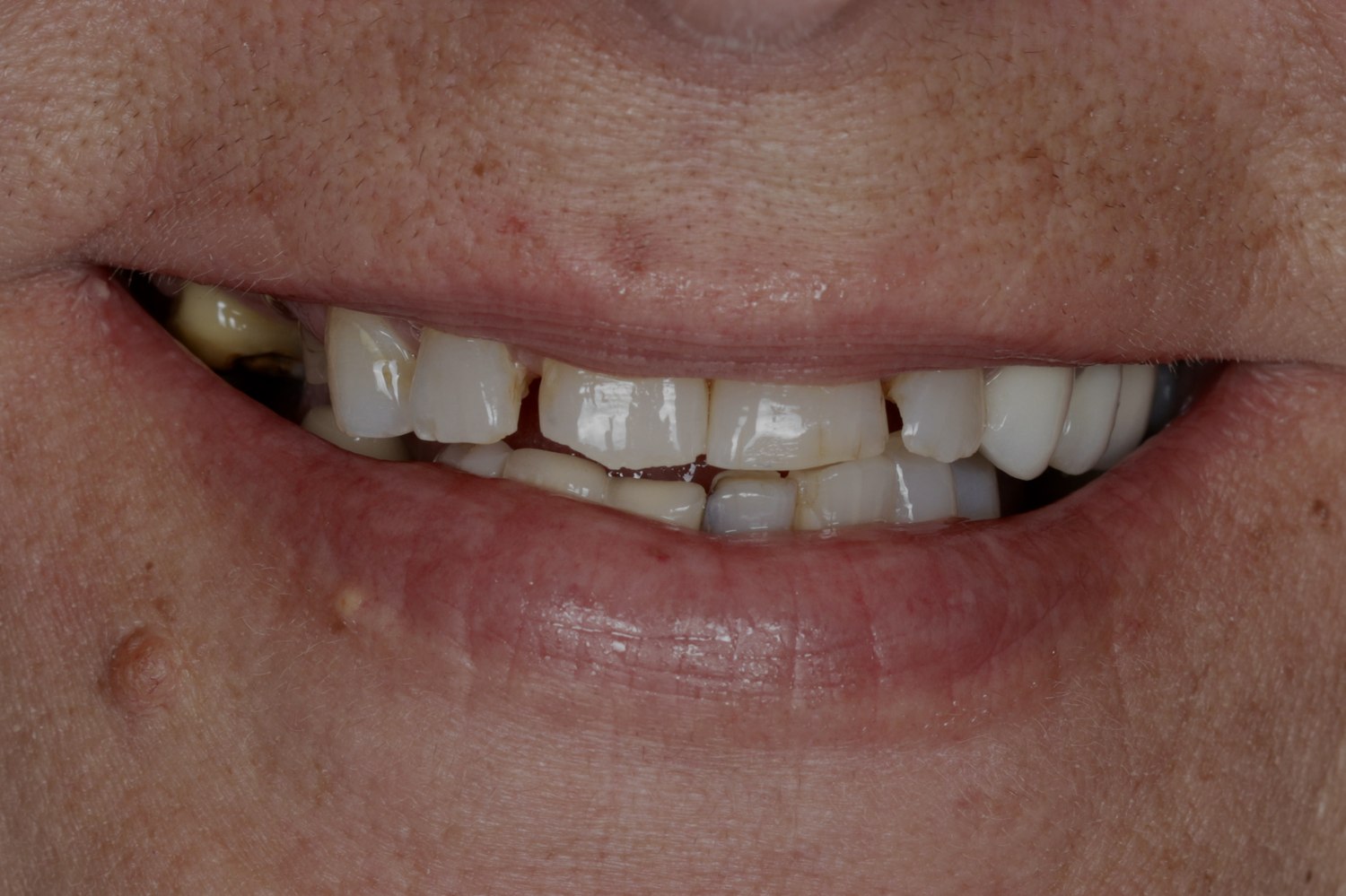 Before
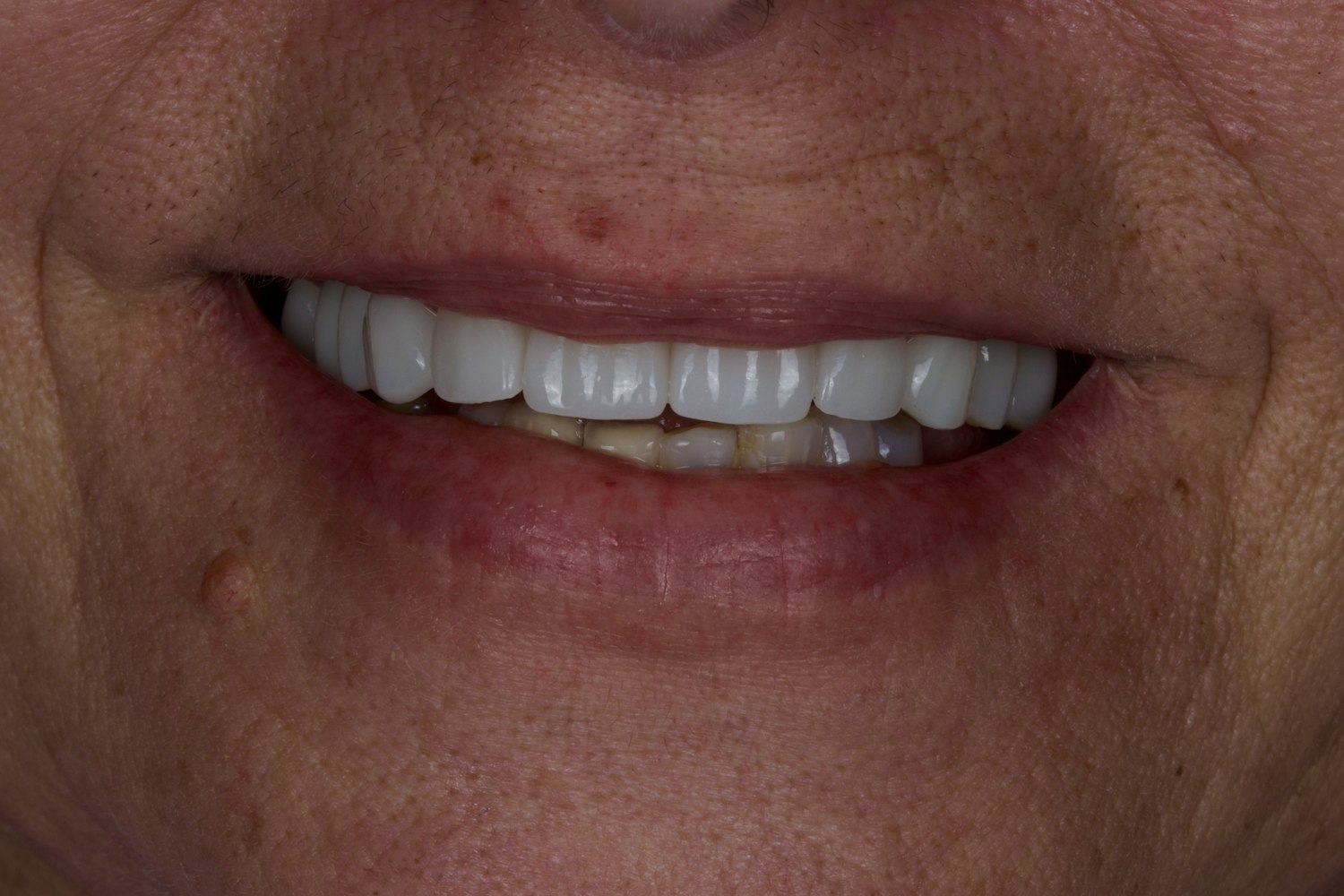 After
AfterTreatment completed in this practice. Photographs reflect an actual patient outcome.
What it is built from
A reconstruction is usually a combination rather than one type of restoration. What goes where is a clinical decision, not a package.
Time and cost
Both vary enormously with the extent of the case, so anyone quoting a figure before examining you is guessing. What can be described honestly is the shape.
Time
Most reconstructions run somewhere between six and eighteen months from first consultation to final restoration. Where implants are involved, healing time drives the schedule rather than appointment availability. Cases requiring grafting take longer.
Cost
Reconstruction is priced by what it contains, so the range is wide. What is worth insisting on is a written plan that itemizes each stage rather than a single headline number, so you can see what you are committing to and in what order. Treatment can often be staged over time, which spreads cost, provided the staging is planned deliberately rather than improvised.
A fair question to ask
Ask what happens if you complete only the first stage. A well-sequenced plan leaves you better off at every stopping point. A plan that only works if you complete all of it is a plan with a risk you should know about in advance.
Common questions
Questions patients ask most often
Will I be without teeth at any point?
No. Provisional restorations are worn throughout, and they are designed to look and function acceptably rather than merely fill a gap. You should never be in a position where you cannot work or socialize during treatment, and if a plan requires that, it should be flagged clearly at the outset.
Does it have to happen all at once?
Often not. Many reconstructions can be staged over months or years, treating the most urgent quadrant first. What matters is that the staging is planned from a single overall design, so each stage is compatible with the next rather than being an improvised repair.
Will insurance cover any of it?
Some components typically are covered, such as crowns on teeth with existing damage, though dental annual maximums are usually between $1,000 and $2,500, which covers a small fraction of a full reconstruction. Where tooth loss followed trauma or medical treatment, some medical coverage may apply. We help you determine what applies rather than assuming.
How long will the result last?
Well-executed reconstructions frequently last fifteen years or more, and individual components longer. Longevity depends heavily on two things you control: whether you wear the night guard if one was prescribed, and whether you attend maintenance reviews. The most common cause of premature failure is the original force that caused the damage being allowed to continue unchecked.
Why see a prosthodontist rather than a general dentist for this?
Full mouth reconstruction is essentially the definition of prosthodontic training, which is a three-year residency focused specifically on rebuilding function, bite and appearance across a whole mouth. Many general dentists do this work well. The relevant question is how many complete cases a clinician finishes in a year, and that is entirely fair to ask directly.
Start with a written plan, not a quote
A consultation includes full records, an assessment of what is actually driving the breakdown, and a staged written plan with the sequence and pricing set out. If a less extensive treatment would serve you better, we will tell you that.
Request a ConsultationDr. Akshay Parmar, BDS, DDS, MDSc, FACP, FAAMP. Board-certified prosthodontist, Hamilton Township, New Jersey.