

Documented clinical case · Retention and stability
Implant-Assisted
Overdenture
The patient's conventional denture moved during function and lacked dependable retention. The treatment objective was not necessarily a fixed bridge, but a removable prosthesis with improved anchorage, easier hygiene and a design appropriate to the available anatomy.
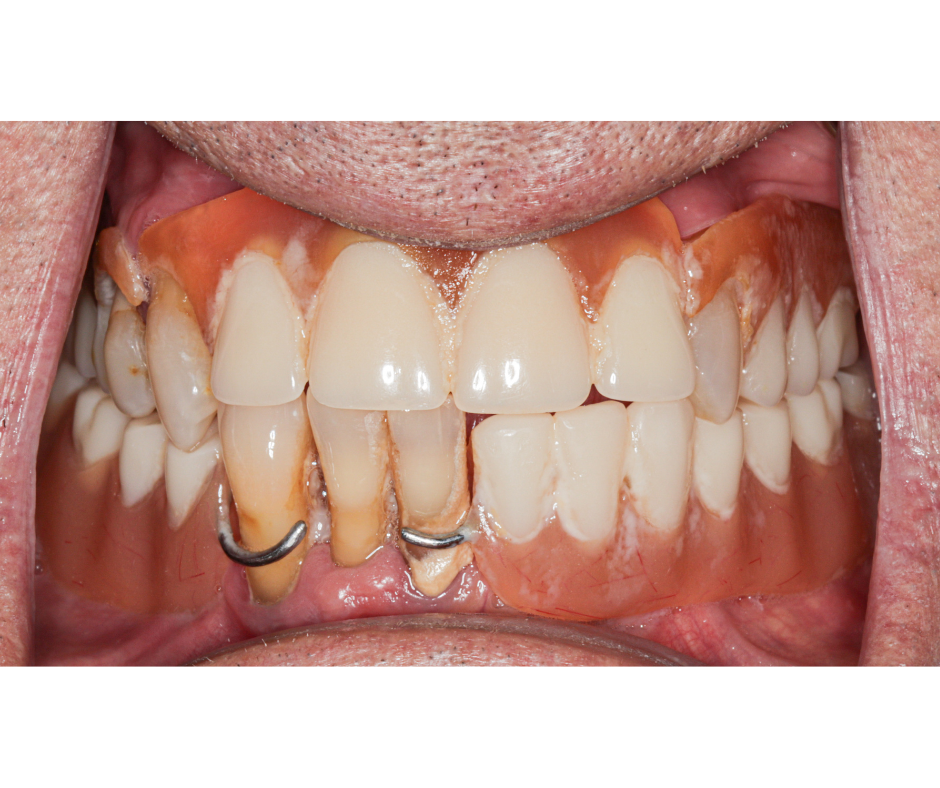
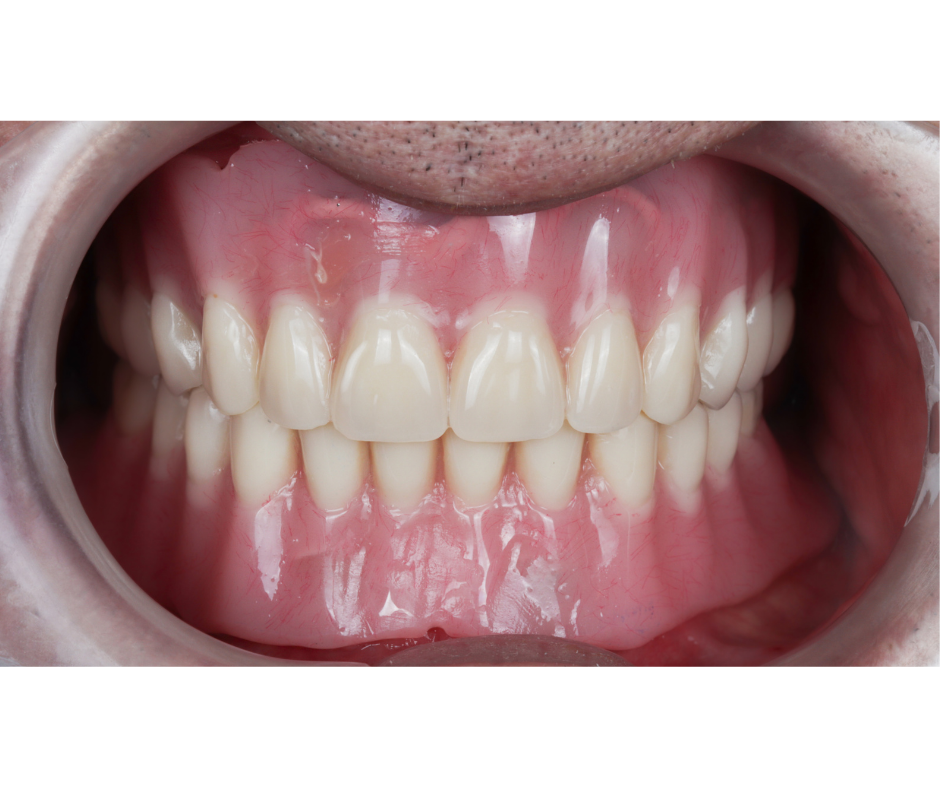
Photographs document this patient's treatment. Individual anatomy, diagnosis, healing and outcomes vary. Images are educational and do not promise a particular result.
01 · Functional Problem
A denture can look acceptable and still fail during function
Retention, border extension, tissue support, bite relationships and available bone were reviewed. The patient's primary limitation was instability during eating and speaking rather than appearance alone.
02 · Treatment Choice
Removable treatment can be the right specialist solution
An implant-assisted overdenture was selected to improve retention while remaining removable for cleaning. The number and location of implants, attachment design and prosthetic contours were planned together.
03 · Prosthetic Design
Attachments require space, alignment and maintenance access
The overdenture was designed around the implant attachments, available restorative space and tissue support. The bite and polished surfaces were refined for function, stability and patient handling.
04 · Outcome
Retention improved without sacrificing hygiene access
The completed overdenture provided a more secure prosthesis for daily function while allowing removal for cleaning. Attachment wear and individual adaptation vary, so periodic adjustment remains part of care.
A Connected Treatment Plan
From implant surgery to final teeth,
one considered plan.
Dr. Parmar plans the final teeth from the beginning, connecting diagnosis, surgical planning, restoration and maintenance. He coordinates your care with the team at your treating practice, with the treatment setting and sequence determined by your individual needs.
01
Diagnosis and 3D planning
02
Implant surgery
03
Provisional teeth
04
Final prosthesis
05
Long-term maintenance
Treatment Sequence
A staged path to the final result
- 01Denture and bone assessment
- 02Implant and attachment planning
- 03Implant placement and healing
- 04Overdenture fabrication
- 05Attachment service and recall
Long-Term Care
The case continues after delivery
Overdenture attachments and inserts wear with use and may need replacement. The implants, supporting tissues, prosthesis fit and bite should be reviewed at regular maintenance visits.
Your diagnosis will be your own
Begin with a comprehensive evaluation
Clinical photographs can show what is possible in one case. An examination determines what is appropriate and predictable for you.
Request a Consultation