

Documented clinical case · Corrective reconstruction
Failed Implant and Prosthetic
Rehabilitation
The patient presented with an implant-supported prosthesis affected by fracture, poor fit, unstable occlusion and compromised aesthetics. Corrective treatment began by identifying which components and implants could be retained and which parts of the previous design required replacement.
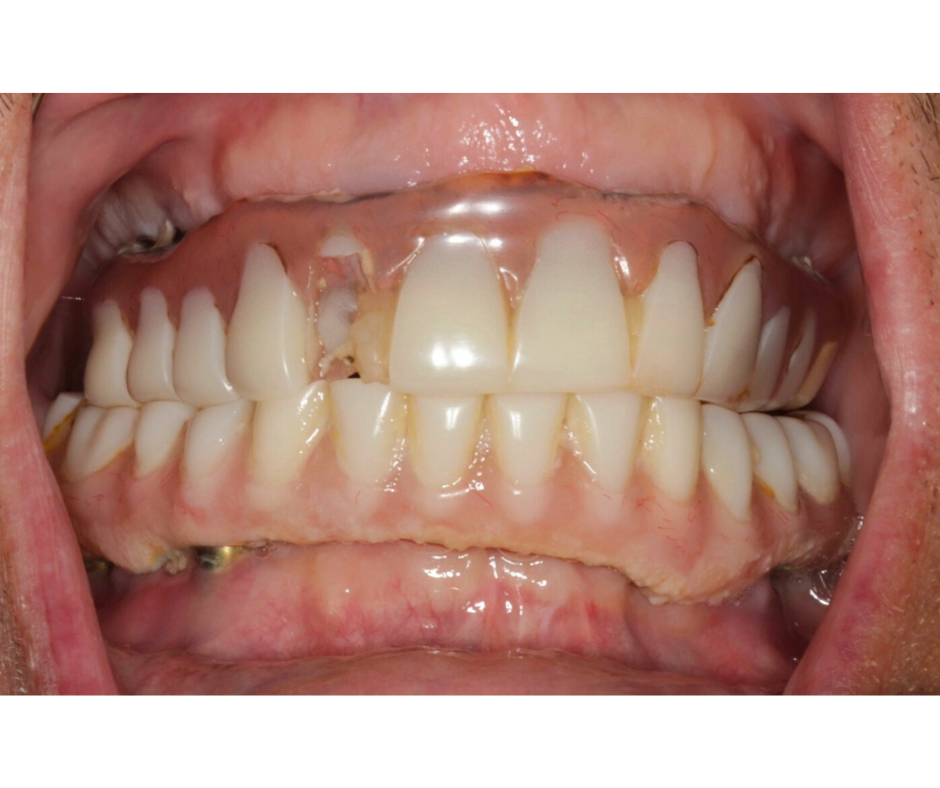
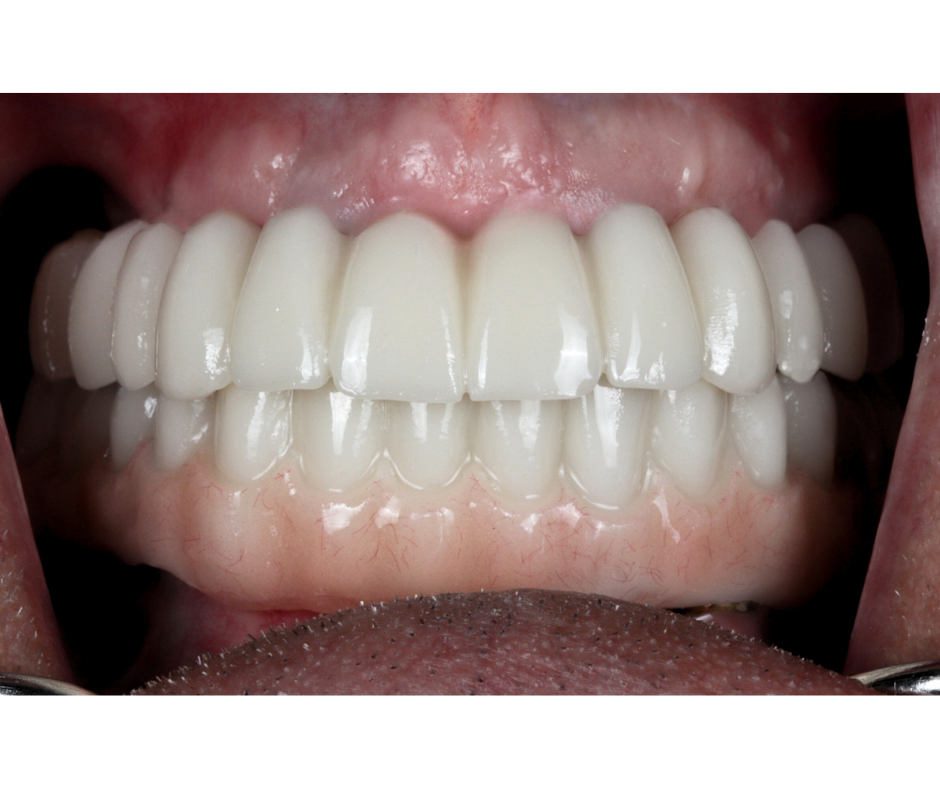
Photographs document this patient's treatment. Individual anatomy, diagnosis, healing and outcomes vary. Images are educational and do not promise a particular result.
01 · Failure Analysis
Why did the previous treatment fail?
A useful revision plan must investigate fit, implant position, component condition, tissue health, cleansability, restorative space and occlusal loading. Replacing a fractured part without understanding the cause risks repeating the same problem.
02 · Salvage Decisions
Retain what remains biologically and mechanically sound
The case was reviewed component by component. Corrective treatment focused on preserving usable support while changing the prosthetic and occlusal factors that contributed to instability.
03 · Reconstruction
The prosthesis and bite were re-engineered together
The corrective design addressed passive fit, force distribution and material support. The occlusal scheme was reorganized to reduce unfavorable loading and create a restoration that could be cleaned and monitored.
04 · Outcome
Correction included a plan for surveillance
The completed rehabilitation improved prosthetic stability, tissue access and aesthetic integration. Revision outcomes depend on the condition and position of the existing implants, which means some cases require a different pathway.
A Connected Treatment Plan
From implant surgery to final teeth,
one considered plan.
Dr. Parmar plans the final teeth from the beginning, connecting diagnosis, surgical planning, restoration and maintenance. He coordinates your care with the team at your treating practice, with the treatment setting and sequence determined by your individual needs.
01
Diagnosis and 3D planning
02
Implant surgery
03
Provisional teeth
04
Final prosthesis
05
Long-term maintenance
Treatment Sequence
A staged path to the final result
- 01Records and failure analysis
- 02Implant and component assessment
- 03Corrective provisional design
- 04Definitive prosthetic reconstruction
- 05Tissue and mechanical monitoring
Long-Term Care
The case continues after delivery
Corrected implant work is reviewed for tissue inflammation, screw or component changes, prosthetic wear and occlusal stability. Maintenance intervals are based on the patient's risk and the complexity of the reconstruction.
Your diagnosis will be your own
Begin with a comprehensive evaluation
Clinical photographs can show what is possible in one case. An examination determines what is appropriate and predictable for you.
Request a Consultation